
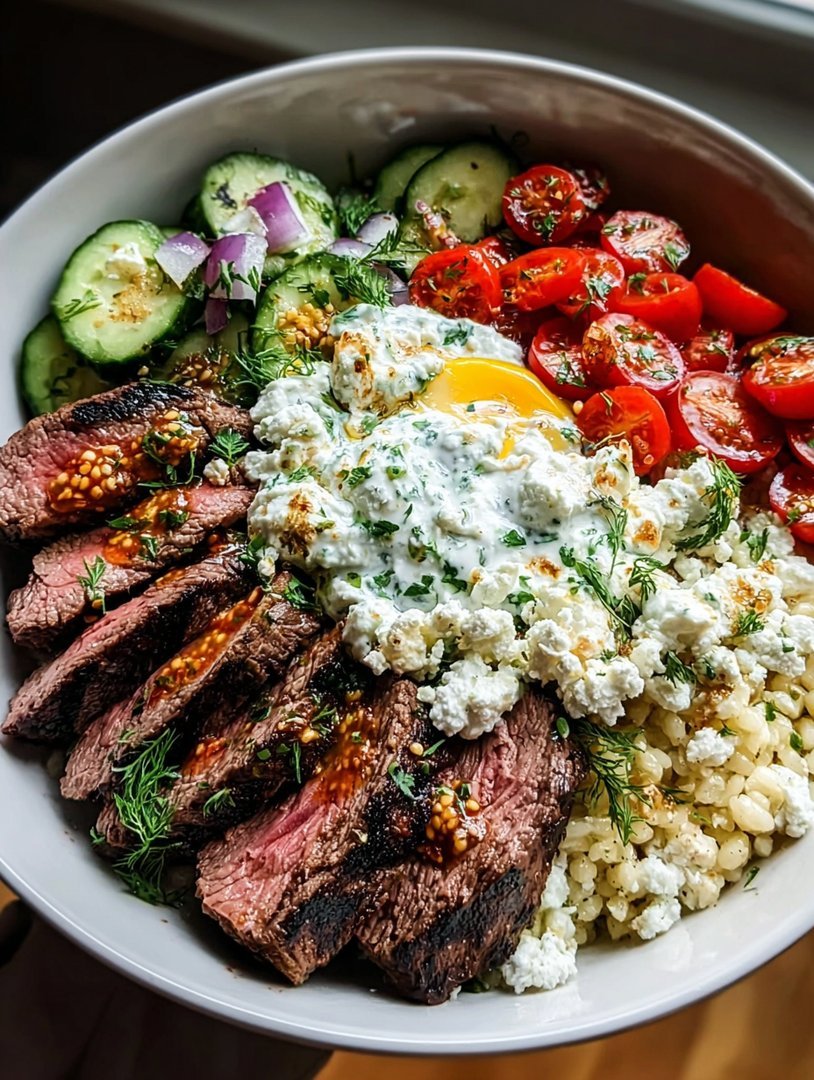
The quest for a vibrant, satisfying weeknight meal often ends in disappointing takeout menus, but tonight is different. ThisMediterranean Steak Bowl Recipedelivers dazzling flavors with impressive ease, transforming simple ingredients into a feast. Get ready for a truly delicious culinary escape!
Imagine tender, perfectly seasoned steak nestled among bright vegetables and tangy dressing. This bowl isn’t just dinner; it’s proof that world-class flavor is achievable, even when you only have thirty minutes and a vague memory of what day it is.
- Tangy lemon vinaigrette perfectly complements the savory, char-grilled beef, creating a bright and highly balanced taste sensation that excites the palate.
- Most components can be prepped ahead of time, making this recipe a fantastic and flexible option for quick meal planning and rapid assembly during busy weeks.
- A gorgeous rainbow of fresh ingredients—from sweet ruby red tomatoes to crisp green herbs—makes this hearty bowl look like genuine edible art.
- Easily customize the base grain or swap the sirloin for chicken or lamb, ensuring this delicious meal works perfectly for nearly every dietary preference.
Ingredients for Mediterranean Steak Bowl Recipe
Here’s what you’ll need to make this delicious dish:
- Steak (Sirloin or Flank)Select a cut that is about one inch thick for quick searing; this beef absorbs marinade beautifully.
- Lemon Juice and ZestUse fresh lemons only; the zest is crucial for releasing those bright, essential oils into the dressing and marinade.
- Olive Oil (Extra Virgin)This forms the base of the marinade and dressing, adding richness and helping the spices adhere to the steak.
- Garlic and OreganoThese classic Mediterranean aromatics are non-negotiable and provide the primary depth of flavor for the beef.
- Cherry Tomatoes and CucumberDice these into small, uniform pieces to create a vibrant, refreshing salad component within the bowl.
- Red OnionSlice this thinly or pickle it quickly with a little vinegar to cut through the richness of the steak and add a necessary sharpness.
- Feta Cheese (Crumbled)Choose a block of high-quality feta packed in brine and crumble it yourself for the best texture and salty pop.
- Kalamata OlivesSelect pitted olives for ease, ensuring they are firm and slightly briny to balance the sweetness of the vegetables.
- Cooked Grain (Quinoa or Brown Rice)Use a quick-cooking grain to form the foundation of your bowl, providing essential fiber and substance.
The full ingredients list, including measurements, is provided in the recipe card directly below.
How to Make Mediterranean Steak Bowl Recipe
Follow these simple steps to prepare this delicious dish:
Step 1: Marinate the Steak
Pat your chosen cut of beef completely dry. In a medium bowl, whisk together the marinade components: half of the lemon juice, a good amount of olive oil, crushed garlic, dried oregano, salt, and black pepper. Place the steak in the bowl, ensuring it is fully coated. Allow the steak to marinate at room temperature for at least 30 minutes, or refrigerate it for up to four hours for deeper flavor penetration. Remove the beef from the marinade before cooking and pat it dry again to encourage a good sear.
Step 2: Sear the Beef
Heat a large cast-iron skillet or heavy-bottomed pan over medium-high heat. Add a tablespoon of olive oil. Once the oil shimmers, carefully place the marinated steak into the pan. Sear for 3–5 minutes per side, depending on thickness and your preferred level of doneness. For medium-rare, aim for an internal temperature of 130–135°F (54–57°C). Remove the steak from the skillet and transfer it to a cutting board, allowing it to rest covered with foil for 10 minutes. This resting period is critical for juicy results.
Step 3: Prepare the Dressing and Vegetables
While the steak rests, prepare the lemon-herb vinaigrette. Whisk the remaining lemon juice with a generous amount of extra virgin olive oil, a pinch of salt, and fresh herbs like parsley or dill. Separately, combine the diced cucumbers, tomatoes, and thinly sliced red onion in a bowl. Do not dress the vegetables yet; you want them to remain crisp when serving.
Step 4: Assemble the Mediterranean Steak Bowl
Slice the rested steak thinly against the grain. Now, it’s time to build the bowls. Start with a foundation of cooked quinoa or rice in the base of each bowl. Arrange the mixed vegetables, Kalamata olives, and crumbled feta cheese around the grain. Top this generous layer with the sliced steak. Drizzle the entire bowl generously with the fresh lemon-herb vinaigrette right before serving.
Transfer to plates and drizzle with sauce for the perfect finishing touch.
The Secrets Behind the Perfect Mediterranean Steak Bowl
Creating an exceptional bowl relies not just on following the steps but also on understanding the synergy between the different components. A great grain bowl offers variety in texture and balance in flavor. When developing thisMediterranean Steak Bowl Recipe, we focused heavily on ensuring the hearty richness of the beef never overwhelms the bright acidity of the classic Greek components. This equilibrium is what elevates a simple dinner into a memorable experience. My own kitchen once saw a near-catastrophe when I forgot the lemon zest—the entire bowl tasted flat and sad! Don’t skip the zest; it provides that essential volatile oil that awakens every other flavor.
The choice of grain is the first key decision. While brown rice is traditional, using quinoa adds a complete protein and a slightly nutty flavor that complements the earthiness of the oregano. To save time, cook a large batch of your preferred grain at the beginning of the week. Cooling the grain completely before assembly is also vital, as serving a warm base with cold toppings can lead to a less cohesive dish. We often overlook how temperature contrast contributes to the overall eating experience.
Mastering the Steak Marinade and Sear
For this recipe, the beef needs to be savory but not heavy, allowing the herbal notes to shine through. The secret to a phenomenal sear lies in two simple techniques: high heat and dry meat. If your steak is wet—either from the marinade or from washing—the temperature of the pan drops immediately, causing the beef to steam instead of caramelize. That beautiful, deep brown crust (the Maillard reaction) gives the steak the necessary textural contrast against the soft vegetables and creamy feta. Always pat the steak aggressively dry with paper towels immediately before it hits the sizzling hot pan. Remember, even if you are using a good quality non-stick surface, a cast iron skillet is the champion for achieving that authentic restaurant-quality sear.
The marinade’s short duration is also intentional. Since we are using acidic lemon juice, marinating for too long, especially with thinner cuts of beef, can begin to “cook” the protein, resulting in a slightly mushy or overly sour texture. Thirty minutes to one hour is the sweet spot for maximum flavor infusion without sacrificing the steak’s integrity. If you have the luxury of time, dry brining the steak (salting it heavily and letting it sit uncovered in the fridge overnight) before applying the oil and herbs can take the tenderness to the next level.
Building Balanced Flavor Profiles
The magic of Mediterranean cooking often lies in simplicity and the quality of the raw ingredients. Our bowl relies heavily on three elements that work together: brightness, salinity, and crunch. The brightness comes from the lemon and the juicy tomatoes. The essential salinity is delivered by the Kalamata olives and the high-quality feta cheese. Finally, the crunch is provided by the freshly diced cucumber and the subtle texture of the thinly sliced red onion. Combining these textures and tastes in every bite is the goal.
To enhance the flavor, consider adding a pinch of sumac to the vegetable mixture. Sumac, a burgundy spice derived from dried berries, offers a unique, tangy flavor similar to lemon, deepening the overall brightness without adding more liquid acidity. This small addition is a hallmark of authentic, rich Middle Eastern and Eastern Mediterranean recipes and adds a complex layer of flavor that many store-bought bowl kits simply cannot replicate.
Customizing Your Mediterranean Grain Bowl
One of the best things about the grain bowl concept is its incredible flexibility. While the baseMediterranean Steak Bowl Recipeis perfect as is, you can easily adapt it based on what you have available or specific dietary needs. This recipe is fundamentally a framework for nutrient-dense, flavorful eating.
If you prefer a different protein, sliced grilled chicken breast or seared lamb tenderloin works wonderfully. Ensure you use the exact same lemon-oregano marinade for consistency in flavor. For vegetarian variations, switch the steak out for roasted chickpeas or grilled halloumi cheese. Both options offer a robust texture and stand up well to the potent dressing.
For the grain, experiment beyond rice and quinoa. Farro, barley, or even couscous can offer different textures. Farro, with its robust, chewy texture, provides a particularly satisfying foundation. When substituting the grain, remember to adjust the amount of dressing you use; heavier grains often require a slightly more generous coating to prevent the bowl from tasting dry.
Troubleshooting and Storage Tips
Sometimes, even the simplest recipes can present small hurdles. If your steak came out tough, the likely culprit was either overcooking or failing to rest the meat before slicing. Remember: resting allows the muscle fibers to relax and redistribute those delicious juices. If the dressing tastes too sour, a tiny drizzle of pure maple syrup or agave nectar can quickly mellow the acidity without making it taste sugary.
This recipe is excellent for meal prepping, provided you store the components separately. Store the cooked steak in one container, the grain in another, and the fresh vegetables and feta/olives in a third. Keep the dressing completely separate. When assembling your lunch bowl the next day, simply combine the elements and drizzle with the vinaigrette. This separation prevents the fresh ingredients from becoming soggy and ensures the vegetables retain their satisfying crunch, which is crucial for a great lunch experience.
Frequently Asked Questions About Steak Bowls
How long should I marinate the steak for optimal flavor?
Marinating the steak for 30 minutes at room temperature is sufficient to impart great flavor; however, for truly robust results, you can let it sit in the refrigerator for up to four hours, making sure to remove it 30 minutes before cooking.
Can I prepare the lemon vinaigrette ahead of time?
Absolutely, the lemon-herb vinaigrette is highly stable and actually improves in flavor after sitting overnight in the refrigerator. Store it in a sealed jar and give it a good shake just before serving to re-emulsify the ingredients.
What is the best way to reheat leftover steak?
Avoid microwaving the steak slices, as this often makes them tough. Instead, place the steak slices in a warm, dry skillet over low heat for just 1–2 minutes, or arrange them on a sheet pan and heat them briefly in a 300°F (150°C) oven until just warmed through.
Are there any good substitutes for feta cheese?
If you need an alternative to feta, consider using goat cheese for a tangy flavor, or cubed fresh mozzarella if you prefer a milder, creamier taste that still provides a good textural contrast.
The Quest for the Ultimate Weeknight Dinner
We’ve all been there: staring into the fridge at 6 PM, completely depleted after a long day, desperately needing something that feels like a reward but doesn’t require four hours of active cooking. I used to rely on takeout, but my wallet and my waistline started filing formal complaints. I needed a hero, and that hero arrived in the form of the ultimate Mediterranean Steak Bowl Recipe.
Forget dry, boring meal prep. This is a culinary vacation in a bowl, balancing perfectly seared, tender sirloin with bright, crisp vegetables and fluffy grains. It’s so vibrant, you’ll forget you’re eating a healthy weeknight meal. It’s a flavor explosion that transports you straight to the sun-drenched shores of Greece, even if you’re currently battling rush hour traffic noise outside your window.
The beauty of this dish is its modularity. You cook the components simultaneously, and then you assemble your edible masterpiece. No complicated reductions or delicate techniques—just robust, punchy flavors that make every bite exciting. If you want a quick, satisfying, and nutritious meal, look no further than this fantastic beef and quinoa bowl. Let’s dive into making this weeknight dinner champion.
Essential Ingredients for Your Power Bowl
For the Perfectly Seared Steak
- 1 pound sirloin steak, trimmed and sliced against the grain into thin strips
- 2 tablespoons olive oil
- 1 tablespoon lemon juice
- 1 teaspoon dried oregano
- 1/2 teaspoon garlic powder
- Salt and black pepper to taste
The Bowl Base and Toppings
- 1 cup uncooked quinoa, rinsed
- 1 large cucumber, diced
- 1 pint cherry tomatoes, halved
- 1/2 red onion, thinly sliced
- 1/2 cup Kalamata olives, pitted and halved
- 1/4 cup fresh parsley, chopped
- Optional: Crumbled mild cheese (such as a feta-style alternative)
The Bright Lemon-Herb Dressing
- 1/4 cup extra virgin olive oil
- 3 tablespoons freshly squeezed lemon juice
- 1 tablespoon balsamic vinegar
- 1 teaspoon dried dill
- Pinch of sugar or agave nectar
- Salt and pepper
Preparing the Mediterranean Steak Bowl Recipe
The secret to a truly great power bowl lies in the preparation steps. Start with the steak, move to the quinoa, and then focus on the quick chopping needed for the vegetables and dressing. Timing is everything here to ensure the steak stays hot while the grains are perfectly fluffy.
Step 1: Marinating the Steak
In a medium bowl, combine the steak strips with 2 tablespoons of olive oil, lemon juice, oregano, garlic powder, salt, and pepper. Toss everything together vigorously until the steak is completely coated. Let this mixture rest at room temperature for at least 15 minutes while you start the quinoa. This brief marinade time works wonders, tenderizing the steak and allowing the Mediterranean flavors to penetrate deep into the meat.
Step 2: Cooking the Quinoa
Rinse your quinoa thoroughly until the water runs clear—this prevents a bitter taste. Combine the rinsed quinoa with 2 cups of water or vegetable broth in a saucepan. Bring it to a boil, then reduce the heat to low, cover the pot, and simmer for about 15 minutes, or until all the liquid is absorbed. Remove the pot from the heat and let it steam, still covered, for 5 minutes before fluffing it gently with a fork.
Step 3: Whisking the Vinaigrette
While the quinoa steams, prepare the dressing. In a small jar or bowl, combine the extra virgin olive oil, lemon juice, balsamic vinegar, dill, sugar, salt, and pepper. Secure the lid tightly and shake well until the dressing emulsifies slightly and thickens. Taste and adjust the seasoning if necessary—it should be bright and tangy.
Step 4: Searing the Steak
Heat a large skillet or cast iron pan over medium-high heat until it is smoking hot. Add the marinated steak strips in a single layer, making sure not to overcrowd the pan. Sear for 2 to 3 minutes on each side until they develop a beautiful golden-brown crust and reach your desired doneness. Work in batches if necessary to maintain high heat. Once cooked, remove the steak from the skillet and let it rest briefly.
Step 5: Assembling the Mediterranean Bowl
Divide the fluffy quinoa equally among your serving bowls. Artistically arrange the diced cucumber, halved tomatoes, sliced red onion, and Kalamata olives over the quinoa. Top each bowl generously with the resting, flavorful steak strips. Drizzle the entire creation with the tangy Lemon-Herb Dressing and sprinkle with fresh chopped parsley. Serve immediately and prepare for applause.
Perfecting the Cooking Process
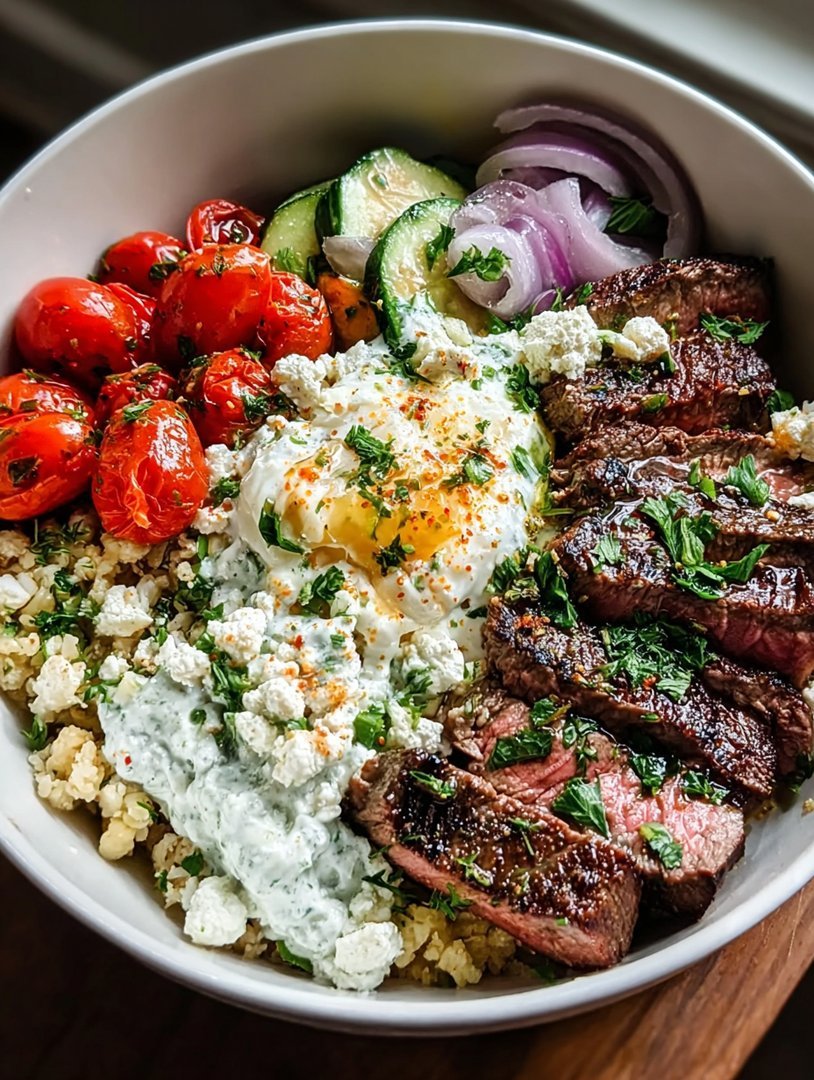
Initiate the process by marinating the steak, allowing those bold herbs to permeate the meat fully. While the steak rests, cook the quinoa and prepare the vibrant dressing simultaneously. Sear the steak last, right before assembly, ensuring the beef remains hot and tender when combined with the cool, fresh bowl ingredients for a perfect temperature contrast.
Add Your Touch
Customize your bowl by swapping quinoa for brown rice or Israeli couscous. For a different protein profile, try marinated chicken breast or grilled lamb skewers. Enhance the herbal notes using fresh mint, or replace the cheese with toasted pumpkin seeds for a dairy-free crunch and texture. A drizzle of homemade creamy yogurt dip also adds a fantastic nutty depth.
Storing & Reheating
Store all components separately in airtight containers to maintain freshness and texture, especially the dressing and vegetables. Reheat the steak and quinoa gently in the microwave or on the stovetop until warmed through. Only combine the warm ingredients with the fresh vegetables and dressing right before you plan to serve the flavorful Mediterranean Steak Bowl Recipe.
Chef’s Essential Tips for the Perfect Bowl
- Always slice the steak against the grain before marinating; this crucial step guarantees maximum tenderness and better absorption of the savory marinade flavors.
- Rinse the quinoa thoroughly before cooking. This simple rinsing removes the saponin coating, preventing a slightly soapy or bitter flavor in the finished grain base.
- Do not overcrowd the skillet when searing the beef strips. Overcrowding drops the pan temperature, resulting in steamed, gray steak instead of a beautifully browned crust.
I served this Mediterranean Steak Bowl Recipe at a family gathering last summer, and my usually picky uncle ate two servings. He claimed he was on a “healthy energy cleanse,” which was high praise coming from a man who usually judges food by its deep-fried potential.
Why This Mediterranean Power Bowl is a Weeknight Winner
This isn’t just a recipe; it’s a lifestyle upgrade. In less than 30 minutes, you create a complex dish that satisfies every craving—the umami richness of the beef, the zesty tang of the dressing, and the satisfying crunch of the fresh garden vegetables. It’s also incredibly balanced, providing lean protein, healthy fats, and complex carbohydrates, making it an ideal post-workout or mid-week dinner solution.
Many people shy away from cooking steak on a weeknight, fearing the cleanup or the time commitment. But using thin sirloin strips dramatically cuts down the cooking time. The marinade, while simple, provides deep complexity, meaning you don’t need fancy sauces to make the beef shine. We rely on the natural, vibrant flavors of the Mediterranean pantry—oregano, lemon, and olive oil—to do all the heavy lifting in this magnificent beef and grain bowl.
If you find yourself constantly bored by your regular rotation of dinners, this Mediterranean steak option provides a perfect escape. It requires minimal fuss but delivers maximum impact. Plus, it’s easily scaleable, making it perfect for meal prepping a few lunches ahead of time. Just remember to keep the wet and dry ingredients separate until you are ready to eat!
Frequently Asked Questions About the Beef and Grain Bowl
Can I prepare the steak marinade ahead of time?
Absolutely. You can place the steak strips in the marinade mixture and store them in the refrigerator for up to 24 hours. However, do not leave the lemon juice in contact with the raw beef for more than a day, as the acid can begin to cook the meat and alter its texture, making it slightly tougher when seared.
What is a good substitute for quinoa?
If quinoa isn’t your favorite, feel free to substitute it with other robust grains like farro, couscous, or even brown rice. Ensure you adjust the cooking time and water ratios according to the specific grain’s package instructions to achieve a tender base for your Mediterranean steak bowl.
How do I ensure my steak strips remain juicy?
The key to juicy steak strips is high heat and short cooking duration. Sear the strips very quickly, ensuring you do not crowd the pan. Always allow the steak to rest for about five minutes after searing—this crucial step allows the meat juices to redistribute throughout the muscle fibers, resulting in maximum tenderness.
Can I add more vegetables to this power bowl?
Certainly! Mediterranean bowls thrive on variety. Excellent additions include roasted bell peppers, chopped artichoke hearts, sun-dried tomatoes (packed in oil, drained), or finely chopped fresh spinach. Adding grilled zucchini or eggplant would also provide a smoky depth that complements the oregano in the beef marinade.
Is this Mediterranean Steak Bowl Recipe suitable for meal prepping?
Yes, this recipe is excellent for meal prepping. To keep the bowl fresh for several days, store the warm components (steak and quinoa) separately from the cold components (dressing and fresh vegetables). When ready to eat, simply combine and dress the ingredients.
The Ultimate Mediterranean Steak Bowl Recipe for Dinner Domination
I remember the first time I tried to make something “healthy” for dinner. It usually involved kale, denial, and a profound lack of flavor. My attempts at nutritional enlightenment typically ended with me ordering delivery pizza. But then, I discovered the sheer power and joy of the Mediterranean diet—specifically, this incredible steak bowl. It’s vibrant, ridiculously satisfying, and it makes you feel like you should be staring out over the Aegean Sea, even if you’re just looking at your neighbor’s perpetually overgrown lawn. Forget bland salads; this is a powerhouse of tender steak, punchy lemon dressing, and crunchy vegetables. This recipe ensures that healthy eating actually tastes like a reward.
Why This Greek-Inspired Beef Bowl Deserves a Standing Ovation
This recipe isn’t just a meal; it’s a culinary vacation delivered straight to your kitchen table. We are maximizing flavor while keeping the prep relatively simple. The real secret lies in the marinade, which tenderizes the beef beautifully and infuses it deeply with classic Mediterranean herbs like oregano and thyme. Paired with cool, crisp cucumbers, juicy tomatoes, and a bright tzatziki-style dressing, this healthy steak bowl hits every texture and taste sensation imaginable. Plus, it is incredibly flexible. You can easily swap out grains or vegetables based on what you have available, making it a perfect champion for meal prepping throughout the week. You’ll never dread lunch again.
Gathering Your Delicious Ingredients
For the Herb-Marinated Steak
- 1.5 lbs Beef (sirloin or flank steak)
- 2 tbsp Olive oil
- 2 tbsp Fresh lemon juice
- 3 cloves Garlic, minced
- 1 tsp Dried oregano
- 0.5 tsp Dried thyme
- Salt and freshly ground black pepper to taste
The Fresh Bowl Fixings
- 1.5 cups Cooked Quinoa or Brown Rice
- 1 large Cucumber, chopped
- 1 pint Cherry tomatoes, halved
- 0.5 Red onion, thinly sliced
- 0.5 cup Kalamata olives, pitted
- Fresh parsley for garnish
- Crumbled Feta cheese (optional)
The Zesty Lemon-Yogurt Dressing
- 0.75 cup Plain Greek yogurt
- 1 tbsp Lemon zest
- 2 tbsp Fresh lemon juice
- 1 tsp Garlic powder
- 1 tsp Dried dill
- 1 to 2 tbsp Water (to thin)
- Salt and pepper
Step-by-Step Guide to Flavor Perfection
Marinating the steak is absolutely step number one for this Mediterranean masterpiece. Whisk together all the marinade ingredients in a medium bowl until fully combined. Place the steak inside a large, resealable bag. Pour the marinade over the steak, ensuring the beef is fully coated on all sides. Refrigerate for at least one hour; however, four hours is ideal for maximum flavor penetration and optimal tenderness.
When you are ready to cook, remove the steak from the marinade. Pat it dry slightly using paper towels to encourage a good sear. Heat a heavy skillet or grill pan over medium-high heat until it is smoking hot. Sear the steak for approximately 4 to 6 minutes per side, adjusting based on thickness and your desired level of doneness. Once cooked, place the steak on a cutting board and let it rest for ten crucial minutes before slicing it thinly against the grain. Do not skip the resting step!
While the steak rests, quickly prepare your creamy, refreshing dressing. Whisk the yogurt, lemon juice, zest, dill, and garlic powder together until the mixture is smooth. Add a tablespoon of water if you prefer a thinner consistency. Season it perfectly with salt and pepper. Assemble the ultimate bowls by starting with a substantial base of your chosen grain. Top generously with the cucumber, tomatoes, olives, and red onion. Arrange the perfectly sliced steak over the vegetables. Finally, drizzle the entire bowl liberally with the creamy lemon-yogurt dressing and garnish everything with fresh parsley and feta.
Pro Tips for the Perfect Mediterranean Steak Bowl
Never crowd the pan when you are searing the steak; this step is essential for developing a beautiful, dark crust. If your pan is too full, the moisture will cause the meat to steam instead of searing, resulting in a lackluster exterior. Always use a good quality extra virgin olive oil for the marinade—it truly makes a noticeable difference in the final taste profile. For successful meal prepping, always keep the dressing separate until you are completely ready to eat. This key step prevents the grains and fresh vegetables from becoming soggy, guaranteeing that your lunch tastes incredibly fresh every time you enjoy it. If you dislike the intense bite of raw onion, try soaking the thinly sliced red onion in cold water for ten minutes before adding it to the bowl. This method effectively mellows the sharp flavor.
Conclusion for Mediterranean Steak Bowl Recipe
This Mediterranean steak bowl recipe proves conclusively that healthy eating doesn’t require sacrificing flavor or fun. We transformed simple, fresh ingredients—tender marinated steak, crisp vegetables, and a bright yogurt dressing—into a dinner winner that satisfies deeply. Remember to rest your steak properly after searing for maximum tenderness and separate your dressing components when storing for flawless meal prepping throughout the week. Whether you are aiming for a quick weeknight dinner or preparing lunches that will make your colleagues envious, this vibrant, easy-to-customize meal delivers a satisfying punch of freshness every single time. Stop dreaming of vacation dinners and start enjoying them tonight!
Print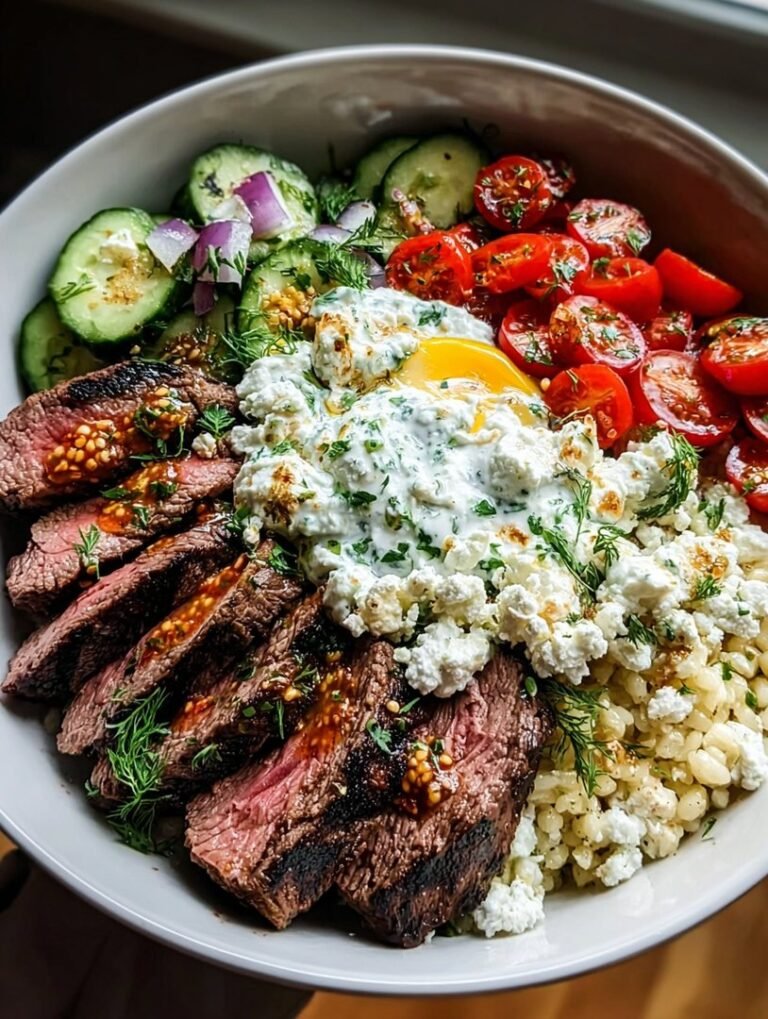
Mediterranean Steak Bowl Recipe
Brighten your weeknight! Zesty, tender flank steak, marinated in lemon and oregano, tops hearty quinoa. This Mediterranean bowl is quick, refreshing, and ready in under an hour.
- Total Time: 35 minutes
- Yield: 4 servings 1x
Ingredients
- 1.5 lbs Flank Steak
- 1/4 cup Olive Oil
- 1/4 cup Fresh Lemon Juice
- 1 tablespoon Dried Oregano
- 1 cup Cooked Quinoa
- 1 cup Chopped Cucumber and Tomato mixture
- 1/2 cup Feta Cheese, crumbled
- 1/4 cup Kalamata Olives, sliced
Instructions
- Step 1: In a shallow dish, whisk together the olive oil, lemon juice, and dried oregano along with salt and pepper to taste. Place the flank steak into the marinade, turning to coat, and refrigerate for at least 30 minutes or up to 4 hours.
- Step 2: Prepare the quinoa according to package directions. While the quinoa is cooking, prepare the fresh toppings (cucumber, tomato, and olives). Keep the fresh toppings separate from the cheese until assembly.
- Step 3: Remove the steak from the marinade and pat it dry. Heat a skillet or grill pan over medium-high heat. Sear the steak for 5-7 minutes per side for medium-rare, or until it reaches the desired doneness. Remove the steak from the heat and let it rest on a cutting board for 10 minutes.
- Step 4: Slice the rested steak thinly against the grain. While slicing, ensure the quinoa is ready and divided evenly among your serving bowls, forming the base of the meal.
- Step 5: Assemble the Mediterranean bowls by arranging the sliced steak neatly over the quinoa base. Distribute the chopped cucumber and tomato mixture, the sliced Kalamata olives, and the crumbled Feta cheese over the top of the bowl. Serve immediately.
Notes
- For maximum freshness, store the cooked steak and quinoa base separately from the fresh components (cucumber, tomato, and feta) in airtight containers for up to 3 days.
- To preserve the texture of the flank steak, gently warm sliced portions in a 300°F oven for 5-8 minutes, or enjoy the refrigerated steak slices chilled over the warm quinoa base.
- For an extra pop of flavor and moisture, finish your assembled bowl with a light drizzle of high-quality extra virgin olive oil or a spoonful of homemade Tzatziki sauce.
- Always pat the marinated flank steak thoroughly dry before searing; removing surface moisture guarantees a deep, flavorful crust instead of steaming the meat.
- Prep Time: 15 minutes
- Cook Time: 20 minutes
- Method: Stovetop
- Cuisine: American
FAQs
What is the best type of beef to use when preparing a Mediterranean Steak Bowl Recipe?
Choosing the right cut makes all the difference in achieving a tender and flavorful dish. We highly recommend using flank steak or sirloin. Both cuts absorb the vibrant lemon and herb marinade exceptionally well, allowing the classic Mediterranean flavors to shine through. Ensure you slice the beef thinly against the grain after resting it properly. This technique breaks down the muscle fibers, guaranteeing a tender bite in every spoonful of your hearty meal. Avoid very lean cuts that might dry out quickly during the high-heat searing process, as they will not contribute to the overall juiciness of the final product.
How can I ensure my Mediterranean Steak Bowl remains fresh and crisp for meal prep?
Successful meal prepping relies heavily on smart layering and separation of components. To keep your ingredients from getting soggy, always store the separate elements individually. The cooked quinoa or rice should go in one container, the fresh vegetables (cucumbers, tomatoes, onion) in another, and the sliced steak stored separately to maintain texture. Most crucially, the lemon-yogurt dressing must be kept entirely separate and only added immediately before consumption. When you assemble your bowl right before eating, every component retains its optimal texture and refreshing crunch, making your weekday lunch delicious and satisfying.
Can I make the dressing for the Mediterranean Steak Bowl Recipe ahead of time?
Absolutely, preparing the zesty lemon-yogurt dressing in advance is an excellent time-saver that enhances the overall flavor. You can whisk together all the ingredients—Greek yogurt, lemon juice, dill, and garlic powder—and store the mixture in an airtight container in the refrigerator for up to three days. In fact, allowing the dressing to rest for several hours or overnight lets the flavors deepen and meld, resulting in an even richer taste profile. If the dressing appears too thick after refrigeration, simply add a splash of cold water or extra lemon juice just before serving to achieve your desired pourable consistency.
What are good substitutions if I don’t have feta cheese for this healthy steak bowl?
While feta adds that quintessential salty, tangy punch to any Mediterranean-inspired meal, several excellent alternatives exist that maintain the integrity of the dish. If you are looking for a similar saltiness, try using crumbled goat cheese; it provides a creamy yet sharp flavor that complements the beef and vegetables wonderfully. For a milder option, cubes of fresh mozzarella or even halloumi (which can be lightly grilled and cubed) work well to add texture and creaminess. If you need a fully dairy-free substitution, focus on increasing the acidity and fresh herbs in your lemon-yogurt dressing instead to boost the overall bright flavor.





Leave a Comment