
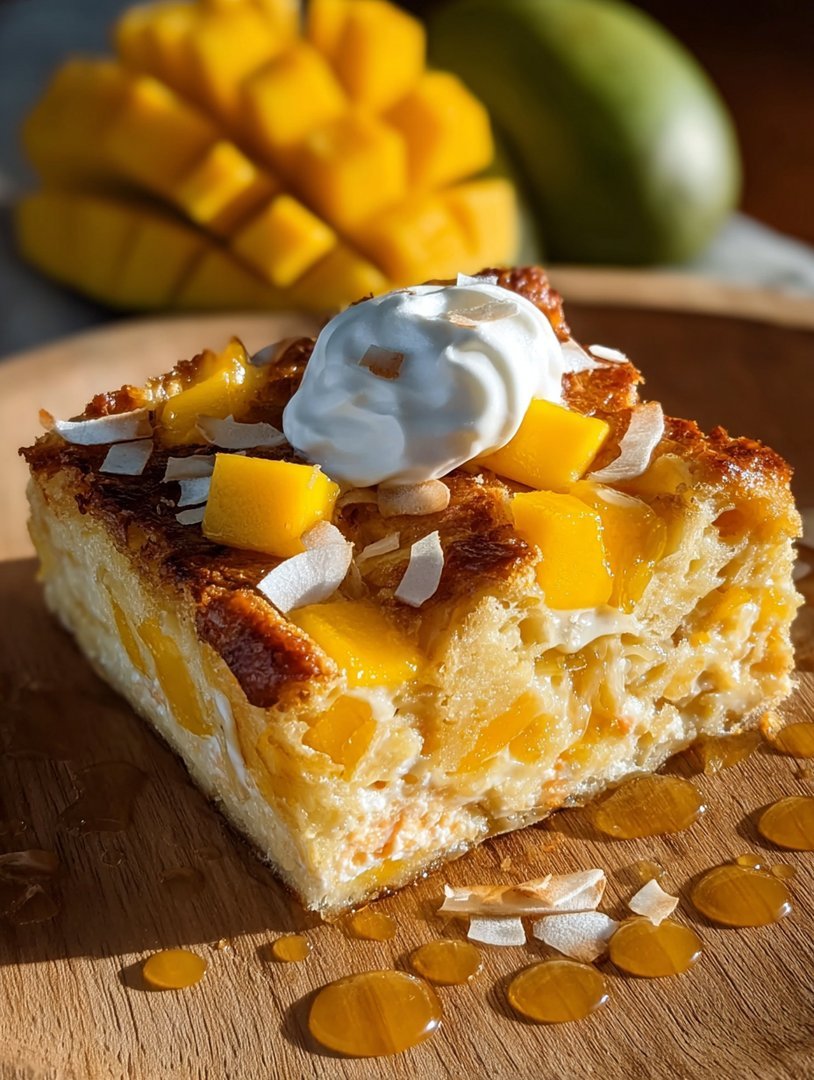
The scent of toasted coconut mingled with ripe, tropical mango is the olfactory equivalent of a beach vacation, even if you’re currently battling snow. Forget everything you thought you knew about stodgy desserts; thisMango Coconut Bread Puddingis here to rescue your palate from boredom. It is ridiculously easy to prepare, transforming humble stale bread into an exotic, creamy, irresistible confection that tastes like sunshine and pure joy.
- This recipe cleverly transforms leftover bread into a luxurious, custard-soaked tropical delight in under an hour.
- The flavor profile strikes a delightful balance between the bright acidity of fresh mango and the comforting warmth of toasted coconut.
- Visually, the golden crust and vibrant mango chunks offer a stunning presentation worthy of any special occasion.
- Extremely versatile, this pudding can be served warm with ice cream or chilled for an exquisite breakfast or brunch treat.
Ingredients for Mango Coconut Bread Pudding
Here’s what you’ll need to make this delicious dish:
- Stale Bread (Brioche or Challah Recommended)Using slightly dried bread ensures it properly absorbs the rich coconut milk custard without becoming mushy.
- Fresh Ripe MangoesSelect mangoes that yield slightly to gentle pressure and offer that intensely sweet, tropical flavor necessary for the pudding.
- Full-Fat Coconut MilkThis is the secret to creamy texture and deep flavor; avoid the “lite” versions if you want true richness.
- EggsThey act as the binder, creating the custard base that holds the bread pudding together when baked.
- Granulated Sugar and Brown SugarA combination of sugars provides depth and moisture, yielding a perfectly caramelized crust.
- Vanilla Bean Paste and CardamomA splash of vanilla and a pinch of cardamom elevate the tropical notes, providing a subtle warmth.
- Shredded Coconut (Sweetened or Unsweetened)Toasting the coconut briefly intensifies its flavor and provides a wonderful contrasting chewiness.
The full ingredients list, including measurements, is provided in the recipe card directly below.
How to Make Mango Coconut Bread Pudding
Follow these simple steps to prepare this delicious dish:
-
Step 1: Prep the Bread and Baking Dish
Preheat your oven to 350°F (175°C). Cut the stale bread into 1-inch cubes; you should aim for about 8 to 10 cups. Lightly grease a 9×13 inch casserole dish and scatter the cubed bread evenly across the bottom.
-
Step 2: Whisk the Custard Base
In a large bowl, whisk together the full-fat coconut milk, eggs, both sugars, vanilla bean paste, and the subtle hint of cardamom until the mixture is smooth and thoroughly combined. This mixture must be well integrated to ensure a uniform custard.
-
Step 3: Assemble and Soak
Pour the prepared custard evenly over the cubed bread in the casserole dish. Gently press the bread down to ensure every piece is saturated. Let the pudding stand for at least 20 minutes at room temperature, allowing maximum absorption before baking.
-
Step 4: Add Mangoes and Toasted Coconut
Dice the fresh mangoes into small cubes, reserving some slices for garnish after baking. Sprinkle the diced mango and three-quarters of the shredded coconut over the soaking bread pudding mixture. Cover the dish loosely with foil.
-
Step 5: Bake and Finish
Bake the covered pudding for 30 minutes. Remove the foil and sprinkle the remaining coconut on top. Continue baking uncovered for another 15 to 20 minutes, or until the custard is set and the top is golden brown and bubbling slightly.
Transfer to plates and drizzle with a light coconut cream glaze for the perfect finishing touch.
The Anatomy of a Perfect Pudding
Every great dish has a secret weapon, and for the perfect bread pudding, that weapon isn’t some rare exotic spice; it’s just really old bread. Yes, the unsung hero of this dessert is bread that has seen better days. When my grandmother first shared this recipe, I made the rookie mistake of using fresh, pillowy brioche. The result? A soggy, unholy mess that crumbled upon contact. She laughed, of course, telling me I needed bread that was practically ready for the compost bin.
The science is simple: fresh bread contains too much moisture and collapses under the weight of the custard. Stale bread, however, is dry and structured, acting like a little sponge ready to absorb all that decadent coconut milk goodness. This absorption is critical for achieving that beautiful dichotomy of textures—a crispy, caramelized crust leading into a creamy, luscious interior. Don’t rush this crucial step. If your bread isn’t stale, slice it up and leave it exposed on a baking sheet for a few hours, or briefly toast it in a low oven (around 250°F or 120°C) until it is dry to the touch but not burnt.
The addition of tropical flavors elevates this humble dessert far beyond the usual comfort food territory. We’re not just making bread pudding; we’re crafting a tropical escape in a bowl. The combination of sweet, robust mango and creamy, pungent coconut transports you immediately to a hammock swinging gently between two palm trees. When choosing your mangoes, remember that they must be ripe. A hard, sour mango will ruin the flavor profile. Look for that gentle give, that characteristic sweet aroma near the stem, and you know you’ve found the right fruit for your ultimateMango Coconut Bread Puddingexperience.
Mastering the Coconut Custard Base
The custard base is the heart and soul of this recipe. If the custard is thin, the pudding will be runny; if it’s too thick, it won’t soak properly. Finding that sweet spot requires attention to two key elements: fat and patience. We insist on using full-fat coconut milk here. This is not the time for calorie counting; the high fat content contributes significantly to the richness and luxurious mouthfeel we are aiming for. Substituting with dairy milk or low-fat alternatives results in a vastly inferior texture, failing to achieve that deep, tropical creaminess.
When you whisk the eggs into the coconut milk and sugar, whisk gently but thoroughly. You are aiming for homogenization, not aeration. Too many air bubbles can cause the custard to separate or rise awkwardly during baking, creating a texture that is more soufflé than pudding. The cardamom, used sparingly, is the secret weapon in this custard. It doesn’t overpower the mango or coconut but provides a grounding warmth that makes the tropical flavors pop. It’s like adding a quiet bass note to a vibrant, sunny melody.
The soaking time (Step 3) is mandatory, not optional. Letting the bread sit in the custard for at least 20 minutes, or even 30 if you have the patience, allows the bread to fully saturate. If you skip this step, the top layer of bread will dry out and burn before the center of the pudding has fully cooked. For an even more decadent and deeply flavored result, sometimes I assemble the entire dish the night before, cover it tightly, and let it soak up all the custard magic overnight in the refrigerator. Just remember to let it come slightly closer to room temperature before baking the next day to ensure even cooking.
Tips for Achieving Tropical Perfection
Selecting the Right Mangoes and Bread
While brioche and challah are traditional favorites due to their richness and slightly sweet nature, you can absolutely use standard French baguette or even thick-cut sandwich bread, provided it’s allowed to dry out sufficiently. The denser the bread, the longer it will need to soak. Conversely, the quality of the mango truly dictates the finished product. If fresh mangoes are out of season or difficult to source, high-quality frozen mango chunks work surprisingly well, especially if you thaw them completely and blot them dry with a paper towel before incorporating them into the mix. This prevents excessive moisture from interfering with the custard’s setting process, which is vital for a perfectMango Coconut Bread Pudding.
Customizing the Toppings and Glaze
The toasted coconut topping offers a beautiful textural contrast, but don’t stop there. For serving, a drizzle of simple coconut cream glaze elevates the presentation beautifully. To make a quick glaze, simply whisk together a small amount of powdered sugar with a tablespoon or two of thick coconut cream (the solid part scooped from the top of a refrigerated can of full-fat coconut milk) until smooth. You can also add a hint of lime zest to this glaze for an extra tropical zing. This provides a lovely counterpoint to the richness of the pudding itself.
If you enjoy nuts, slivered almonds or macadamia nuts, toasted alongside the coconut, provide an excellent crunch. Remember to hold back some of the toasted coconut and mango until the final stage of baking. Sprinkling them on top during the last 15 minutes ensures they achieve a perfect golden hue without burning, offering that visual appeal that screams “eat me now.” Serving this dish warm, perhaps with a scoop of vanilla bean ice cream that melts slightly into the custard, creates an incredibly satisfying dessert experience. The contrast between the warm, soft pudding and the cold, smooth ice cream is truly sublime.
Why Bread Pudding Makes the Best Dessert Statement
Many desserts require precision, careful folding, and the silent prayer that your meringue doesn’t weep. The beauty of this dessert is its forgiving nature. It’s comforting, rustic, and inherently delicious, even if you slightly mismeasure the sugar or use bread that’s a little too fresh. This dish isn’t about striving for surgical perfection; it’s about transformation and comfort. It speaks to that primal urge for warmth, but with a vibrant, unexpected tropical twist that lifts the mood instantly. It’s a great dish for sharing because its generous nature encourages digging in and enjoying the communal experience.
I once served this to a dinner party where everyone was expecting a heavy, formal dessert. When this bright, fragrantMango Coconut Bread Puddingemerged from the kitchen, the collective sigh of relief was audible. It’s substantial enough to feel like a decadent treat, but the mango and coconut keep it feeling light and festive, avoiding that heavy, overly dense feeling associated with classic bread puddings. It pairs wonderfully with a strong cup of coffee or even a chilled sparkling ginger-lime beverage. Whether you’re trying to impress guests or simply trying to use up that rapidly aging loaf sitting on your counter, this recipe is your ticket to culinary glory. It’s proof that sometimes, the greatest flavors come from the simplest ingredients, layered with intention and a touch of tropical flair that makes everyone feel like they are sunbathing on a faraway island.
The Accidental Discovery of Sunshine on a Plate
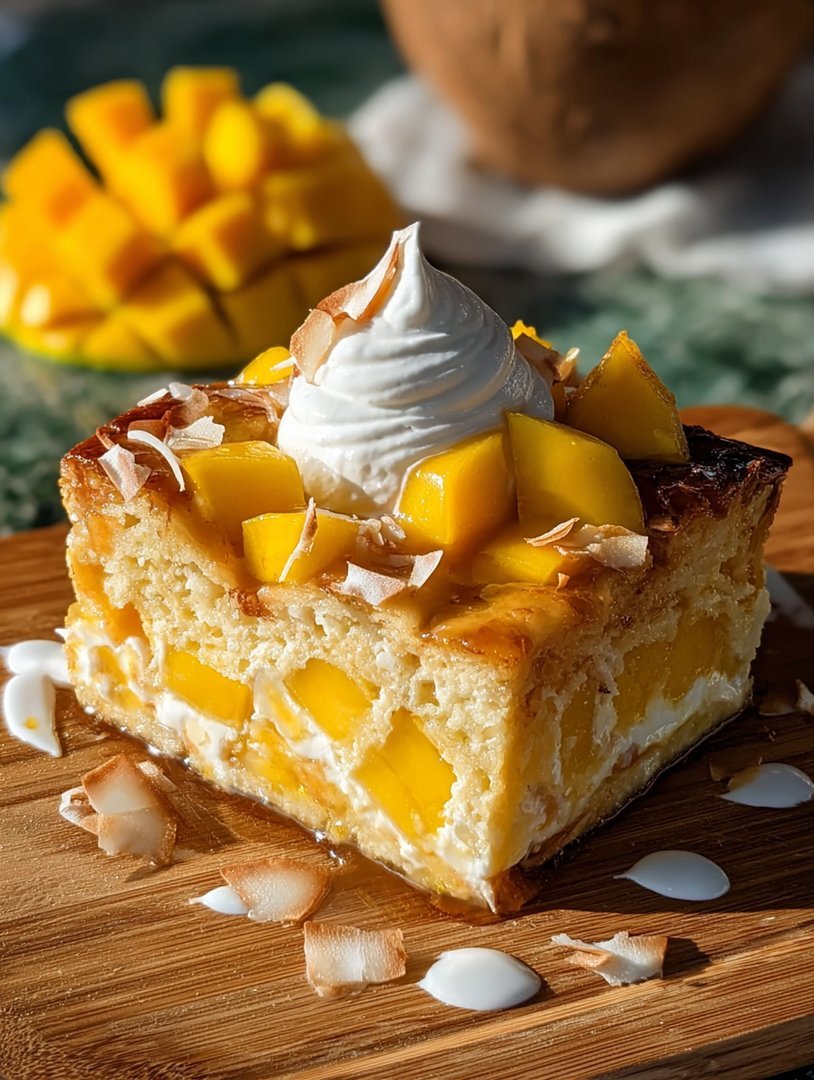
This tropical delight was born from desperation after a massive mango haul and stale brioche. I mixed everything in a frenzy, hoping for something edible. The result? A warm, custardy dream—the very first batch of Mango Coconut Bread Pudding.
The Tragic Tale of the Forgotten Bread
I’m convinced that the best recipes are often born from mild kitchen panic. My husband, bless his heart, came home from the farmer’s market one Saturday with enough Ataúlfo mangoes to feed a small village and two gigantic loaves of brioche we absolutely did not need. For three days, those mangoes sat there, glowing with tropical potential, while the brioche started its slow march toward being a doorstop.
I refuse to waste good carbs. After consulting the pantry—which looked suspiciously full of coconut milk and vanilla—the idea hit me: why not resurrect the bread, marry it to the mangoes, and bake sunshine? Bread pudding always felt a bit heavy, like a dessert only appropriate for December, but adding bright, juicy mango and creamy coconut milk transformed it into something light, intoxicating, and perfect for any season. It’s like a tropical vacation for your taste buds, no passport required. This isn’t your grandma’s dense, raisin-studded bake; this is island luxury served warm.
Ingredients for Tropical Bliss
The Bread and Custard Base
- 6 cups cubed stale brioche or challah bread (day-old is ideal)
- 3 large eggs
- 1 large egg yolk (for extra richness)
- 1 (13.5 oz) can full-fat coconut milk
- 1/2 cup granulated sugar (adjust to mango sweetness)
- 1/4 cup shredded sweetened coconut flakes, plus extra for topping
- 1 teaspoon pure vanilla bean paste
- 1/4 teaspoon ground nutmeg
- A pinch of salt
The Star of the Show: Mango
- 2 ripe Ataúlfo or sparkling grape juice mangoes, diced (about 2 cups)
- 1 tablespoon fresh lime juice (to brighten the flavor)
Instructions: Making Mango Coconut Bread Pudding
Preparing the Bread and Custard
Preheat your oven to 350°F (175°C). Grease a 9×13 inch baking dish generously. Cube the stale bread into roughly one-inch pieces and scatter them evenly in the prepared dish. In a large mixing bowl, whisk together the eggs, egg yolk, coconut milk, sugar, 1/4 cup coconut flakes, vanilla bean paste, nutmeg, and salt until the mixture is smooth and the sugar is mostly dissolved.
Soaking and Baking for Optimal Creaminess
Gently fold the diced mangoes and lime juice into the custard mixture. Pour this entire tropical liquid over the bread cubes in the baking dish, ensuring every piece of bread is coated. You may need to press down lightly with the back of a spoon. Let the bread pudding sit and soak for at least 30 minutes. This mandatory resting period allows the bread to fully absorb the liquid, guaranteeing a creamy texture rather than a dry, uneven bake. Once soaked, sprinkle the top generously with extra coconut flakes.
Bake for 45 to 55 minutes, or until the custard is set and the top is golden brown and toasted. A knife inserted near the center should come out mostly clean. Let it cool slightly before serving. This Mango Coconut Bread Pudding is phenomenal served warm with a dollop of whipped cream or even a scoop of vanilla bean ice cream. The combination of warm custard and cool topping elevates this dessert beyond expectation, making it a perfect closing act for any meal.
Perfecting the Cooking Process
The key to perfect texture involves soaking the bread fully before baking—aim for thirty minutes minimum. While the bread is soaking, preheat the oven and prepare any optional toppings like a simple mango glaze or toasted macadamia nuts. This sequence ensures maximum creamy absorption.
Add Your Touch
Try swapping the mangoes for pineapple and passionfruit for a different tropical twist. If you like a crunch, sprinkle toasted pecans or macadamia nuts over the top before baking. You can also infuse the coconut milk with cardamom pods during the whisking process for added warmth.
Storing & Reheating
Store leftover Mango Coconut Bread Pudding tightly covered in the refrigerator for up to four days. To reheat, microwave individual portions briefly or place the entire dish covered in foil in a 300°F oven until heated through. Never reheat until dry, or the custard will separate.
Chef’s Insider Tips for Optimal Results
-
Always use stale bread; fresh bread collapses too easily and results in a dense, soggy pudding, whereas stale bread holds its structure better for a lighter final texture.
-
Don’t skip the lime juice, as it cuts through the richness of the coconut milk and sugar, preventing the Mango Coconut Bread Pudding from tasting too cloyingly sweet.
-
Full-fat coconut milk is non-negotiable here; using low-fat versions will thin the custard too much, leading to a watery base instead of a rich, creamy interior.
My younger niece, who swore she only ate chocolate desserts, devoured two huge servings recently. She simply called this tropical bread dessert “pudding sunshine,” which is honestly the highest praise it could ever receive.
Conclusion for Mango Coconut Bread Pudding
This recipe for Mango Coconut Bread Pudding proves that kitchen accidents often lead to the greatest triumphs. It’s a delightful fusion of creamy richness and bright, tropical flavor, turning humble ingredients like stale bread and canned coconut milk into an elegant dessert.
Whether you need a quick dessert for unexpected guests or a comforting treat on a rainy afternoon, this coconut mango delight delivers every time. Remember to use stale bread and allow for that crucial soaking time to achieve the ultimate custardy texture. Serve it warm, watch the smiles spread across the room, and enjoy your little slice of baked sunshine.
Print
Mango Coconut Bread Pudding
Dive into this tropical dream! Rich brioche cubes soak up a silky coconut custard, studded with sweet mango. Baked until golden perfection. Full guide and complete nutritional analysis included.
- Total Time: 35 minutes
- Yield: 4 servings 1x
Ingredients
- 1 standard loaf (about 1 pound) crusty bread (challah or brioche), cut into 1-inch cubes
- 1 (13.5 oz) can full-fat coconut milk
- 1/2 cup whole milk or heavy cream
- 3 large eggs
- 1/2 cup granulated sugar
- 1 1/2 cups diced fresh mango
- 1/2 cup sweetened shredded coconut, plus extra for topping
- 1 teaspoon vanilla bean paste
Instructions
- Step 1: Preheat the oven to 350°F (175°C). Lightly grease an 8×8-inch baking dish. Place the cubed bread into the prepared dish along with the diced mango and the 1/2 cup of shredded coconut, tossing gently to combine.
- Step 2: Prepare the custard mixture by whisking together the coconut milk, whole milk (or cream), eggs, granulated sugar, and vanilla powder in a large bowl until the mixture is uniform and the sugar is dissolved.
- Step 3: Pour the custard mixture evenly over the bread cubes, making sure all the bread is coated. Press the bread down gently with a spatula to ensure maximum absorption. Let the mixture sit for 20 to 30 minutes at room temperature to allow the bread to fully soak up the liquid.
- Step 4: Once soaked, lightly sprinkle the top of the pudding with the extra shredded coconut (optional). Bake the bread pudding for 40 to 50 minutes, or until the top is golden brown, the edges are set, and a knife inserted near the center comes out clean (a slight wobble is acceptable).
- Step 5: Remove the bread pudding from the oven and allow it to cool on a wire rack for at least 15 minutes before serving. This bread pudding is delicious served warm, optionally topped with extra fresh mango chunks or a scoop of vanilla ice cream.
Notes
- Store leftovers tightly covered in the refrigerator for up to 3 days; while delicious reheated, this pudding is also excellent served chilled straight from the fridge.
- To revive the crispy top and prevent dryness, reheat individual slices in a 300°F oven for about 10 minutes, covering loosely with foil if the edges begin to brown too quickly.
- Enhance the tropical profile by serving the warm pudding drizzled with a simple lime glaze or a spoonful of mango purée mixed with a splash of pineapple juice with almond extract or coconut flavored syrup.
- For the perfect tender interior, ensure your bread cubes are slightly stale or lightly toasted, which helps them absorb the coconut custard completely without dissolving during the crucial 30-minute soak time.
- Prep Time: 15 minutes
- Cook Time: 20 minutes
- Method: Stovetop
- Cuisine: American





Leave a Comment