
The aroma of vibrant basil, nutty Parmesan, and succulent shrimp dancing together is enough to make any mouth water. This Pesto Shrimp Pasta is a symphony of flavors that sings of summer, sunshine, and utter deliciousness!
Imagine twirling your fork around perfectly cooked pasta, each strand coated in a luscious pesto, studded with juicy shrimp. It’s a culinary hug that’s both quick to make and deeply satisfying.
Here’s why you’ll fall head-over-heels for this Pesto Shrimp Pasta:
- Ready in under 30 minutes, this recipe is perfect for busy weeknights when you crave a gourmet meal without the fuss.
- The combination of fresh basil pesto, tender shrimp, and perfectly al dente pasta creates an unforgettable flavor explosion.
- With its vibrant green pesto and pink shrimp, this pasta dish is as pleasing to the eye as it is to the palate.
- Easily customizable with your favorite vegetables or pasta shapes, this recipe is a versatile foundation for endless culinary creativity.
Ingredients for Pesto Shrimp Pasta
Here’s what you’ll need to make this delicious dish:
The full ingredients list, including measurements, is provided in the recipe card directly below.
How to Make Pesto Shrimp Pasta
Follow these simple steps to prepare this delicious dish:
Step 1: Cook the Pasta
Bring a large pot of salted water to a boil. Add the pasta and cook according to package directions until al dente. Reserve about 1 cup of pasta water before draining.
Step 2: Make the Pesto
While the pasta is cooking, prepare the pesto. In a food processor, combine fresh basil, Parmesan cheese, pine nuts, garlic, lemon juice, salt, and pepper. Pulse until finely chopped. With the food processor running, slowly drizzle in olive oil until the pesto reaches your desired consistency.
Step 3: Cook the Shrimp
In a large skillet, heat a tablespoon of olive oil over medium heat. Add the shrimp and cook for 2-3 minutes per side, or until pink and cooked through. Be careful not to overcook the shrimp, as they can become rubbery.
Step 4: Combine and Serve
Add the cooked pasta to the skillet with the shrimp. Toss to combine. Add the pesto and toss again, adding a little pasta water at a time until the sauce reaches your desired consistency. Season with additional salt and pepper to taste.
Step 5: Garnish and Enjoy
Serve immediately, garnished with extra Parmesan cheese and a sprinkle of fresh basil. A squeeze of lemon adds a final burst of flavor.
Transfer to plates and enjoy this Pesto Shrimp Pasta for the perfect finishing touch.
Perfecting the Cooking Process
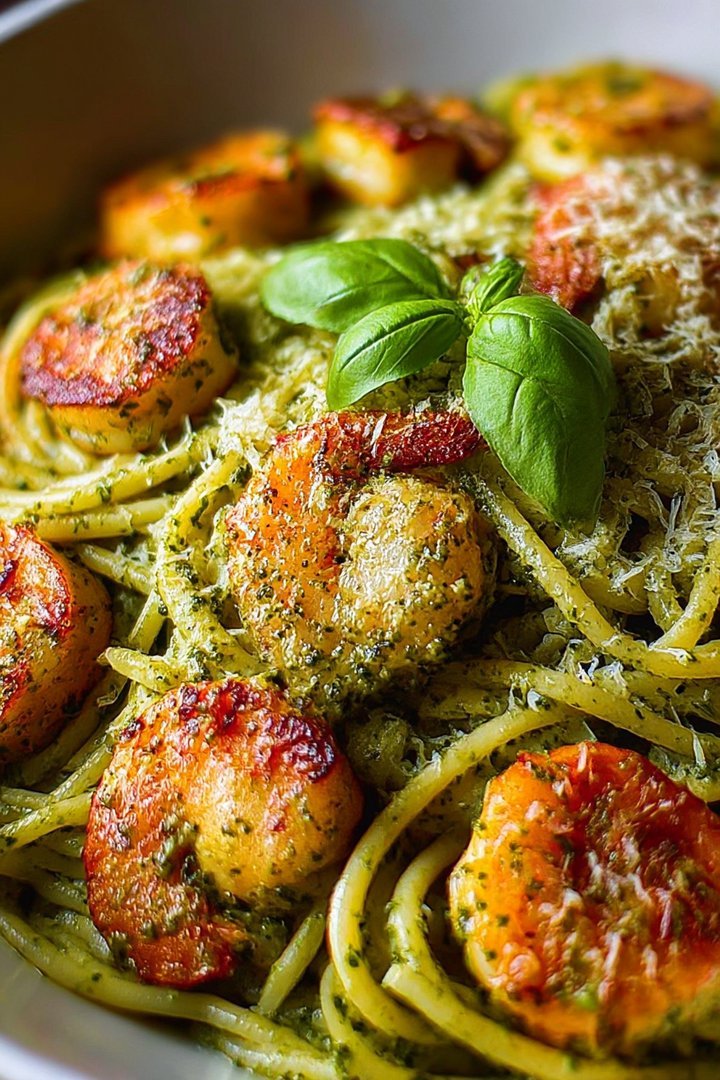
To nail this pesto shrimp pasta, timing is key. First, get your pasta water boiling. While the pasta cooks, sauté the shrimp. They cook super fast, so watch them closely. Finally, toss everything together with the pesto and serve immediately for the best flavor.
Add Your Touch
Want to make this dish your own? Try adding roasted cherry tomatoes for a burst of sweetness. A sprinkle of red pepper flakes can kick up the heat. For a creamier sauce, stir in a spoonful of ricotta cheese before serving. Get creative!
Storing & Reheating
Got leftovers? Store them in an airtight container in the fridge for up to two days. To reheat, gently warm the pasta in a pan with a splash of broth or water to prevent it from drying out. Microwaving is also an option, but the texture may suffer.
Here are a few tips to make your pesto shrimp pasta absolutely amazing:
- Don’t overcook the shrimp! They should be pink and opaque, but still tender. Overcooked shrimp are rubbery and sad.
- Use high-quality pesto. The flavor of the pesto will really shine, so choose a brand you love or make your own for the best result.
- Salt your pasta water generously. This is your only chance to season the pasta itself, so don’t be shy with the salt!
(Personal anecdote formated as paragraph subheading)
My friend Sarah once said my pesto shrimp pasta was so good, it made her want to lick the plate. That’s when I knew I had perfected the recipe, and now I am excited to share it with you.
The Star of the Show: Shrimp Selection
Choosing the right shrimp is crucial for a delicious pesto shrimp pasta. Look for plump, firm shrimp with a fresh, sea-like smell. Avoid any that smell fishy or ammonia-like, as this indicates they are not fresh. You can use either fresh or frozen shrimp, but if using frozen, be sure to thaw them completely before cooking. Pat them dry with paper towels to ensure they get a good sear in the pan. The size of the shrimp is also a matter of preference; larger shrimp are more impressive, while smaller shrimp can be easier to eat in a pasta dish.
Prepping Your Shrimp Like a Pro
Properly prepping your shrimp is almost as important as choosing the right ones. First, rinse the shrimp under cold water. Then, remove the shells and devein them. Deveining is important not only for aesthetic reasons but also because the vein can sometimes have a gritty texture. To devein, use a small knife to make a shallow slit along the back of the shrimp and remove the dark vein. If you’re short on time, you can buy shrimp that are already peeled and deveined, but prepping them yourself ensures the freshest possible flavor.
Pesto Perfection: Homemade vs. Store-Bought
Ah, pesto! The heart and soul of this dish. You have a choice to make: homemade or store-bought? Making your own pesto is surprisingly easy and undeniably delicious. Fresh basil, pine nuts, garlic, Parmesan cheese, and olive oil all whirled together in a food processor… pure magic! But let’s be real, sometimes you just don’t have the time. If you opt for store-bought pesto, choose a high-quality brand with vibrant green color and a fresh, herbaceous aroma. Avoid anything that looks dull or tastes overly oily. Taste-test before adding it to your pasta, and adjust the seasoning as needed. A little extra Parmesan or a squeeze of lemon juice can brighten up store-bought pesto.
DIY Pesto: A Basil Bonanza
For those adventurous souls ready to tackle homemade pesto, let’s break it down. You’ll need about two cups of fresh basil leaves, rinsed and dried. Toast your pine nuts lightly in a dry skillet for a nutty depth of flavor. Grate your Parmesan cheese fresh – pre-shredded cheese often contains cellulose, which can hinder the pesto’s creamy texture. Mince your garlic and add it to the food processor along with the basil, pine nuts, and Parmesan. Drizzle in good-quality olive oil while the processor is running, until you reach a smooth, emulsified sauce. Season with salt and pepper to taste. And there you have it: pesto perfection!
Pasta Possibilities: Choosing Your Noodle
The type of pasta you choose can significantly impact the final dish. While spaghetti is a classic choice for pesto shrimp pasta, feel free to experiment! Linguine, with its slightly wider, flatter shape, is also excellent for catching the flavorful pesto sauce. For a heartier meal, consider using penne or rotini, which have ridges and crevices that hold the sauce beautifully. Or, if you’re feeling fancy, try using fresh pasta for an extra-special touch. No matter what shape you choose, be sure to cook it al dente – that is, firm to the bite. Overcooked pasta turns mushy and unappetizing.
The Art of Al Dente: Cooking Pasta Perfectly
Achieving al dente pasta is simpler than you might think. Use a large pot with plenty of salted water. Add the pasta once the water is at a rolling boil and stir it immediately to prevent sticking. Cook according to the package directions, but start checking for doneness a minute or two before the recommended time. The pasta should be firm to the bite, with a slight resistance in the center. Once it’s cooked, drain it quickly and immediately toss it with the pesto shrimp sauce. This prevents the pasta from sticking together and allows it to absorb the flavors of the sauce.
Bringing It All Together: The Pesto Shrimp Pasta Symphony
Now for the grand finale: assembling your pesto shrimp pasta masterpiece! Once the pasta is cooked and drained, and the shrimp is perfectly sautéed, it’s time to bring it all together. In a large bowl, combine the hot pasta with the pesto sauce. Toss gently to coat the pasta evenly. Add the sautéed shrimp and any additional ingredients you’re using, such as roasted cherry tomatoes or red pepper flakes. Toss again to combine. Serve immediately, garnished with fresh basil leaves and a sprinkle of Parmesan cheese.
Serving Suggestions and Garnishes Galore
To elevate your pesto shrimp pasta even further, consider these serving suggestions and garnish ideas. A squeeze of fresh lemon juice brightens up the flavors and adds a touch of acidity. A sprinkle of toasted pine nuts adds a delightful crunch. Freshly grated Parmesan cheese is always a welcome addition. For a more substantial meal, serve the pasta with a side of garlic bread or a simple green salad. And don’t forget a glass of crisp white juice to complete the experience! The goal is to create a dish that is not only delicious but also visually appealing.
Making it Lighter: Healthier Swaps and Substitutions
If you’re looking to lighten up this pesto shrimp pasta, there are several simple swaps and substitutions you can make. Use whole wheat pasta for added fiber. Reduce the amount of olive oil in the pesto, or substitute some of it with water. Use shrimp instead of chicken for a leaner protein source. Add plenty of vegetables, such as spinach, zucchini, or bell peppers, to boost the nutritional value. And instead of heavy cream, use a dollop of Greek yogurt for creaminess with less fat.
Vegetarian Variations: Pesto Pasta Without the Shrimp
For a vegetarian version of this dish, simply omit the shrimp and add other vegetables. Roasted vegetables, such as zucchini, eggplant, and bell peppers, work beautifully with pesto. You can also add sautéed mushrooms, artichoke hearts, or sun-dried tomatoes. For added protein, consider adding chickpeas or white beans. The key is to choose vegetables that complement the flavor of the pesto and provide a satisfying texture.
(Personal anecdote formated as paragraph subheading)
I once accidentally used mint instead of basil in my pesto. It was a disaster, but it taught me the importance of paying attention to ingredients!
Conclusion for Pesto Shrimp Pasta
Pesto Shrimp Pasta is a quick, easy, and utterly satisfying meal that’s perfect for busy weeknights or impressing dinner guests. The combination of vibrant pesto, succulent shrimp, and perfectly cooked pasta is a match made in culinary heaven. With its customizable nature and simple ingredients, this dish is sure to become a family favorite. So, ditch the takeout menu and whip up a batch of this delightful pasta – your taste buds will thank you!
Print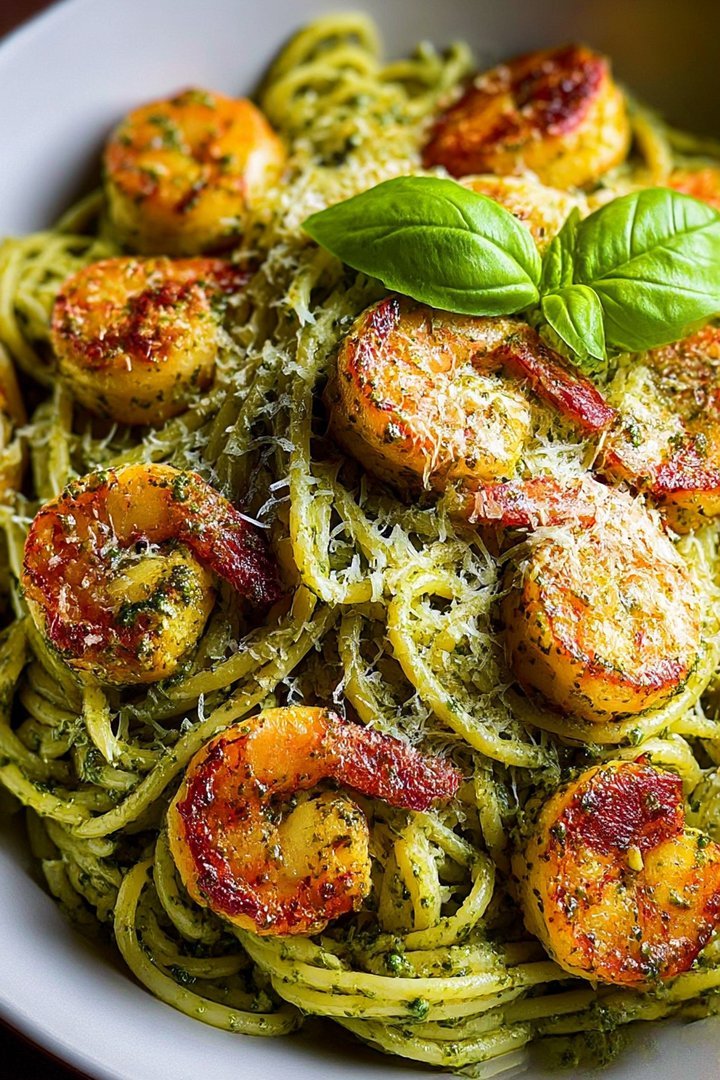
Pesto Shrimp Pasta
Delicious pesto shrimp pasta recipe with detailed instructions and nutritional information.
- Total Time: 35 minutes
- Yield: 4 servings
Ingredients
- Pasta (linguine or fettuccine) – 1 pound
- Shrimp (peeled and deveined) – 1 pound
- Pesto – 1/2 cup
- Cherry tomatoes – 1 pint, halved
- Olive oil – 2 tablespoons
- Garlic – 2 cloves, minced
- Parmesan cheese – 1/4 cup, grated
- Red pepper flakes – 1/4 teaspoon (optional)
Instructions
- Step 1: Cook pasta according to package directions until al dente. Reserve about 1/2 cup of pasta water before draining.
- Step 2: While pasta is cooking, heat olive oil in a large skillet over medium heat. Add garlic and red pepper flakes (if using) and cook until fragrant, about 30 seconds.
- Step 3: Add the shrimp to the skillet and cook until pink and opaque, about 3-4 minutes, flipping halfway through.
- Step 4: Stir in the halved cherry tomatoes and cook for another 2 minutes, until slightly softened.
- Step 5: Add the cooked and drained pasta to the skillet with the shrimp and tomatoes. Toss to combine.
- Step 6: Stir in the pesto and Parmesan cheese. Add a little of the reserved pasta water at a time until the sauce reaches your desired consistency. Serve immediately.
Notes
- Store leftover Pesto Shrimp Pasta in an airtight container in the refrigerator for up to 2 days.
- To reheat, gently warm the pasta in a skillet over low heat with a splash of milk or cream to prevent it from drying out.
- Garnish each serving with extra Parmesan cheese and a sprinkle of fresh basil for a restaurant-worthy presentation.
- Don't overcook the shrimp; they should be just pink and opaque to remain tender and juicy in the finished dish.
- Prep Time: 15 minutes
- Cook Time: 20 minutes
- Method: Stovetop
- Cuisine: American
FAQs
How do I prevent my pesto shrimp pasta from being oily?
Ah, the dreaded oily pasta! Nobody wants their delicious dinner swimming in a slick of grease. The key is to control the amount of oil you add. Pesto already contains a good amount of oil, so go easy on the olive oil when sautéing the shrimp. Also, pat the shrimp dry before cooking to help them brown instead of steaming in oil. If you find your pasta is still too oily, try draining off some of the excess oil from the pan before adding the pesto and pasta. A squeeze of lemon juice at the end can also help cut through the richness.
Can I use frozen shrimp for this pesto shrimp pasta recipe?
Absolutely! Frozen shrimp is a fantastic pantry staple, making this dish accessible whenever the craving hits. Just be sure to thaw the shrimp completely before cooking. The best way to thaw shrimp is in the refrigerator overnight. If you’re short on time, you can thaw them in a bowl of cold water, changing the water every 30 minutes, until they’re thawed. Pat them dry with paper towels before sautéing to ensure they get a nice sear and don’t become waterlogged. Remember, pre-cooked frozen shrimp will also work but requires less cooking time.
What kind of pasta is best for pesto shrimp pasta?
While you can technically use any pasta shape you like, some work better than others with pesto. Long, slender shapes like linguine, spaghetti, or fettuccine are classic choices because the pesto clings to them beautifully. Shell-shaped pasta, like conchiglie or cavatappi, are also great because they capture little pockets of pesto and shrimp in each bite. Ultimately, the best pasta is the one you enjoy most, so feel free to experiment and find your favorite combination! Just make sure not to overcook it; al dente is the way to go for the perfect bite.
Can I make pesto shrimp pasta ahead of time?
While this pesto shrimp pasta is best served fresh, you can definitely prep some components ahead of time to save time later. The pesto can be made a day or two in advance and stored in the refrigerator. You can also thaw your shrimp ahead of time. However, I recommend cooking the shrimp and pasta right before serving to prevent the shrimp from becoming rubbery and the pasta from becoming mushy. If you do need to reheat leftovers, add a splash of broth or water to keep it moist and avoid overcooking.


Leave a Comment